There’s a theme I’m brought around to in my life fairly often, at least several times a year. Like God’s talking to me but I just can’t hear what He’s saying. Like maybe I’m not listening hard enough or maybe just over-complicating what’s in reality very simple. It wouldn’t be the first time I’d made a simple thing more than it is or vice versa, but it’s altogether natural the way I figure it. When it comes right down to it, simplicity and complexity are partners, not foes, and there is nothing that is either purely simple or purely complex, that’s the simple truth…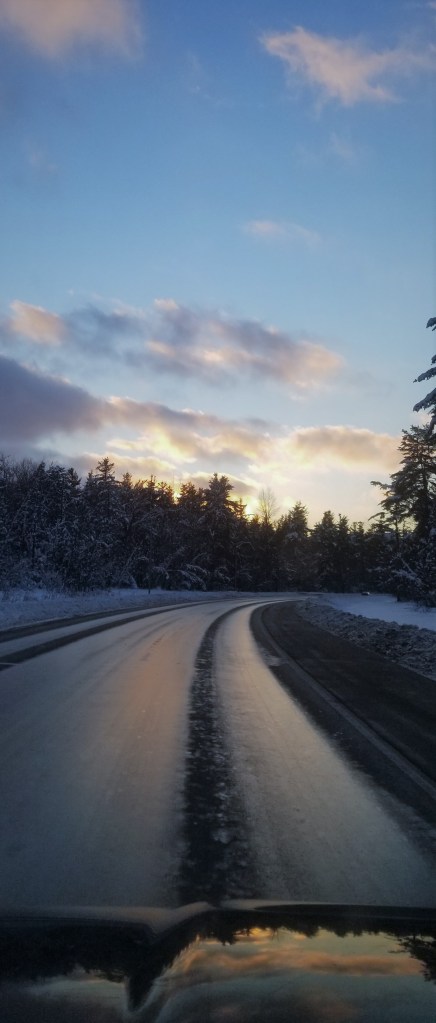
…Anyway, more to my point: There’s a very specific issue that nature seems to have in my eyes. The more time I spend Up North, the more glaringly obvious it is, but it’s not just a factor of northern latitudes, you’ll find it anywhere along the border of civilization and the wild. There’s a question begging to be asked in every cold night sky under the Northern Lights, in every frost-decked tree or desert vista, and it more or less goes like this: Why is something so beautiful so deadly? Moreover, why do we mostly appreciate natural beauty from afar? What truth lies in the fact that a snowy wood gratifies your soul from the porch, but once you step through the treeline, everything changes?
I spent the last ten days out in the field for work. For those who don’t know, I’m currently a Sniper Team Leader in the Army, assigned to an Infantry Battalion. When I say I was in the field, it means I was more or less plying my trade in a training environment. So when I slept, it was often in the snow, in the middle of the woods, on the ground, not far from a fake objective complete with mock-up buildings and real soldiers playing bad guys. Or if not there, then the back of a flat bed truck, and finally, if I was lucky, on the concrete floor of a heated building. What the essential point is, is that I was exposed to the elements for a good portion of that time. That’s not to complain, it’s part of the territory. But this time of year in upstate New York, the weather is equal parts crap and garbage. A night-time infiltration through miles of ice-covered swamp gives way to an afternoon shower with temps around 36 degrees Fahrenheit – just enough to soak everything before the next night set in and the world freezes again. A morning spent belly down in the drifts watching the objective becomes a lunch time being pelted with icy melt dripping off the trees, falling with wet glops down my collar, soaking all three of my layers. Movement of any kind is slow, stomping through two feet of snow to get anywhere, but at night with face-high bare branches snagging on your equipment, it becomes excruciatingly so. I was miserable for most of my time, and there was little comfort in the fact I was getting paid for it. It was just another training exercise after all – another brigade level event where snipers are little more than frozen afterthoughts. There were no profound insights, no reflections on the grandeur of nature. Sunlight through the trees just meant it had stopped raining. Snow-drifts on the boughs just meant night-vision tinted hallucinations of monsters and ghouls. There was just exhaustion, misery, and cold. So when I took the above picture today, driving home from the convenience store in my warm Toyota 4runner, it struck me how different my attitude towards the snowy woods was when sitting in a dry vehicle on the way home.
One night back in Alaska, before Sunnie and I were married, we climbed onto the roof of the house to watch the Aurora Borealis. It was 3 am, and we were wrapped in blankets, but we stood in snow and minus 30 temps for a brutal 30 minutes so we could watch the Lights dancing in the sky. But that’s what it took really, to catch the magic of that moment. The Aurora is almost always right overhead. You can rarely watch it out the window. You often have to be standing outside, willing to tolerate the frigid discomfort below to catch the beauty above you. Robert Frost didn’t write about the dark deep woods while standing there thinking. He put ink to paper only after he finally walked his last miles of the night, put a pot of coffee on, and sat down next to his fire. It’s only from afar that we remember the beauty of nature as anything “lovely, dark, and deep”. In the moment, it’s just survival.
But what does all this mean? Because it has to mean something right? There’s something transcendent about acknowledging the the deepest and greatest beauties in existence are so often lethal up close. Mankind builds cities, and from the walls paints the sunset over the mountains. But we don’t walk there. Not alone. Not unarmed. And if we do, we’re too busy scavenging wood for the fire to appreciate the texture of the grain. The sunset over the hills means soon we will not be able to see. It means temperature drops and wolves howling over the next hill. So often, these days, a quick escape back to town can be made by car. Friends keep you company and Spotify gives melody to the flames at the center of your camp. We’ve forgotten how quickly things can change. We no longer remember why we’ve always feared the wild. We’ve thrown the city on wheels and brought it with us. We watch nature from our outposts of light. And it is beautiful. But we need it to be beautiful over there.
By this point in my life, I’ve reached the conclusion that anything truly beautiful is inherently dangerous. I didn’t say bad, I said dangerous. We crave safety, control, warmth, comfort. But we all still feel that call. It’s just that the call is over mountain, in the dark. It’s in the eyes of the unknown man or woman across the room, the one you can’t stop looking at – the one you’re certain will reject you. It’s in the words of Truth surrounded by a mocking crowd, it’s in your lifelong dream, and the risk of failure. It’s in the shedding of blood for the forgiveness of sins.
Truth, Beauty, Goodness – these things are wild. They are untamed, deadly to your comfort and security, lethal to your apathy. We want them, but they ask too much of us, so we make copies. We put valleys on our screensavers, mountains in our video games. We couch our conversations in weasel words. We mock traditions, commitments – they require sacrifice. We live as if life is a given, and shun death as if it’s avoidable. It’s a bad joke.
In 1940 Helen Keller published a work called “Let us Have Faith” in which she famously said: “Security is mostly a superstition. It does not exist in nature, nor do the children of men as a whole experience it. God Himself is not secure, having given man dominion over His works! Avoiding danger is no safer in the long run than outright exposure. The fearful are caught as often as the bold. Faith alone defends. Life is either a daring adventure or nothing.”
If there is a lesson in the fact that truest loveliness is also lethal, that must be it.
You can admire the woods from your porch, but you’ll never know them. You’ll never breath them in. To follow that call, you’ll need to step into the trees, and leave your warm bed behind. Be forewarned, you may not return. Such is the risk of living.
“For whoever wants to save their life will lose it, but whoever loses their life for me will find it.”
– Matthew 16:25
 North Of The Home Fires